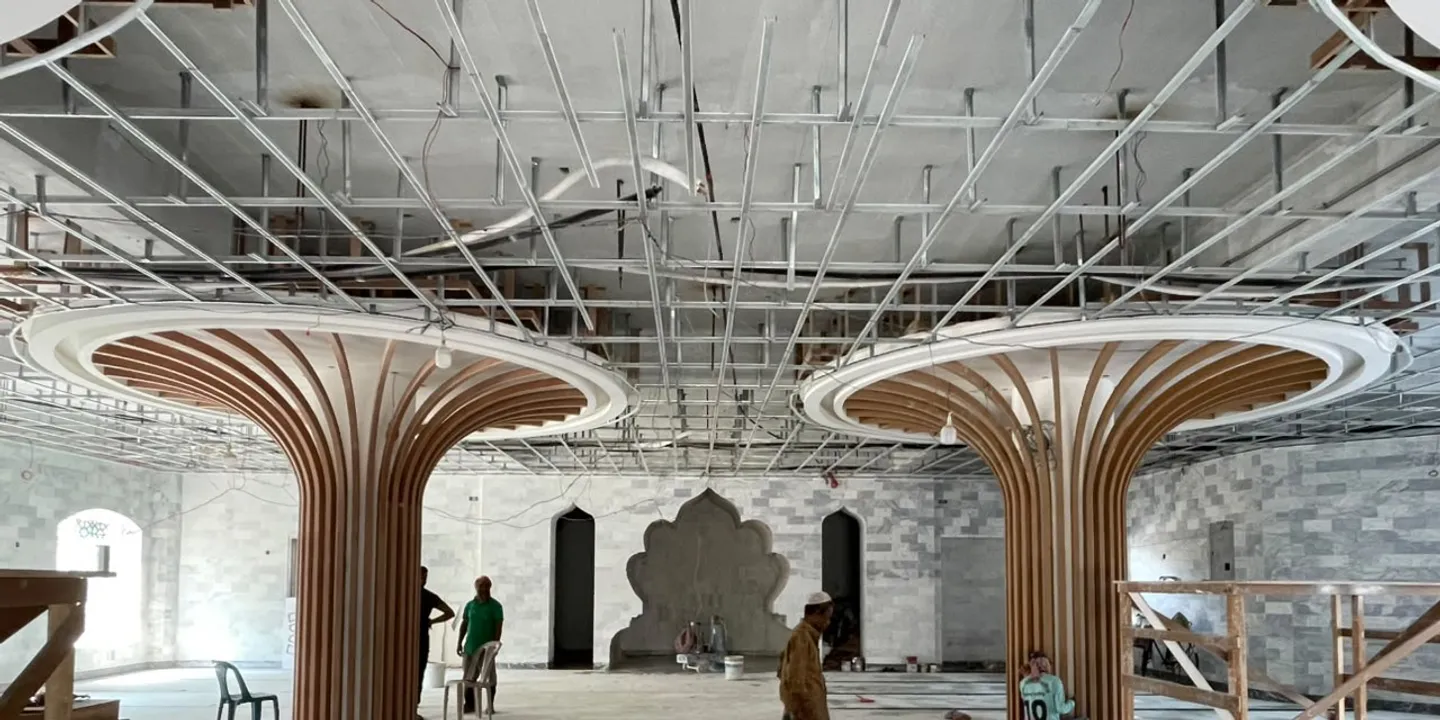
Mosques are among the most important buildings in Sylhet. They are often funded by communities and families, including those living abroad, and they serve people every day for generations. That makes careful design and honest construction more important than usual.
1. Start with the brief
Before drawing, answer these questions with the committee:
- How many worshippers on an ordinary day, and on Jumu’ah and Eid?
- Is a separate space for women needed?
- Will the building host classes, a library or community events?
- What is the site shape, and which way is the qibla?
- What is the budget, and will it be built in phases?
Clear answers prevent redesign later.
2. Plan the spaces
A mosque is more than a prayer hall.
- Prayer hall: open, column-light where possible, with clear sight lines to the mihrab
- Wudu (ablution) area: adequate taps, drainage and privacy, close to the entrance
- Shoe storage: near entrances, with space to queue
- Entrance and circulation: wide enough for Jumu’ah crowds and Eid, with a safe exit
- Women’s area: with its own access, where required
- Toilets, offices and an imam’s room if needed
- Courtyard: for overflow prayers and gathering
Ablution and toilets need strong waterproofing and drainage. See rain-proof house design for Sylhet, where the same principles apply.
3. Light, air and acoustics
A prayer hall should feel calm and bright without glare.
- Natural light. Use high windows, clerestories and lattice screens to bring soft daylight and avoid direct sun on worshippers
- Ventilation. Large crowds generate heat and humidity. Cross-ventilation, high ceilings and fans make a big difference
- Acoustics. Hard surfaces cause echo. Timber ceilings, textured walls and carpets help the imam’s voice stay clear
4. Structure and ceilings
Mosque halls often need large column-free spans and tall ceilings. That means careful structural design, good soil investigation and attention to earthquake safety, since the building may hold many people at once. Read foundation and soil testing for Sylhet sites and earthquake-resistant design in Sylhet.
Ceilings, whether plain, timber or decorative, need a service layer for lights, fans and air-conditioning. Plan it with the electrical designer before the ceiling closes.
5. Materials and craft
Mosques should last. Choose materials that stand up to humidity and heavy use: brick, stone, quality tile, well-finished concrete, treated timber and stainless fixings. Local craftsmen and local materials often give the best value and keep skills in the community.
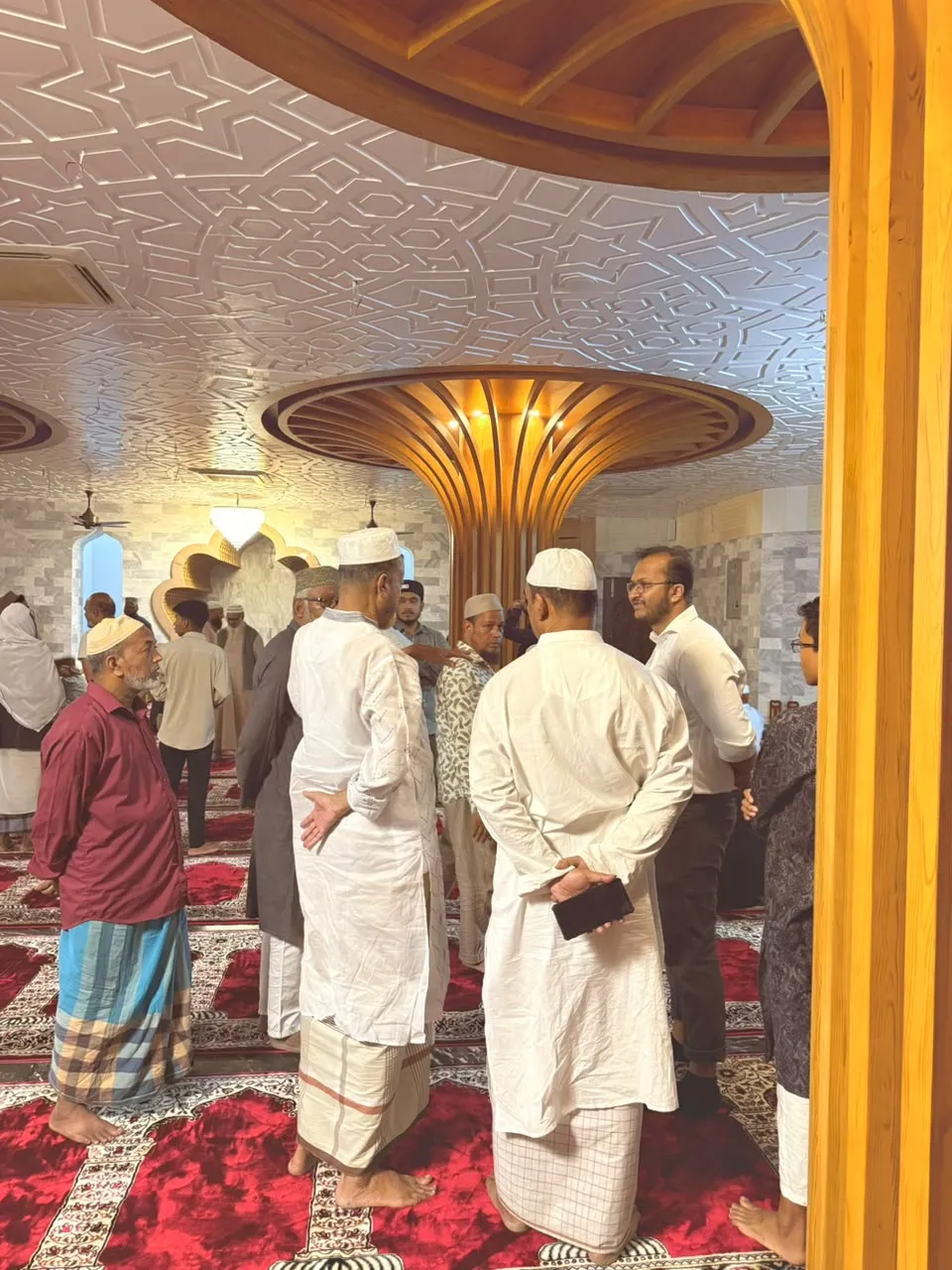
A finished prayer hall in use. The qualities that matter most are the ones you feel: calm light, good sound and comfortable air.
6. Budget and phasing
Many mosques are paid for in stages through donations. That works well if the design is complete from the start.
- Design the whole building and get approval
- Build the structure and prayer hall first
- Complete finishes, ceilings and fittings as funds come in
- Add minaret, ablution blocks, landscaping and extensions in later phases
Keep a written budget and a bill of quantities so donors can see where money goes. Our construction cost guide explains how to build one. Appoint someone qualified to supervise the work and report to the committee, especially if donors live abroad.
7. Approval and supervision
Public and community buildings need approvals from the authority and compliance with the building code, including fire safety and exits. See building plan approval in Sylhet.
Planning a mosque or community building?
Our studio designs mosques, madrasas and other institutional buildings and supports committees and overseas donors through design, approval and supervision. See our projects or get in touch.
Frequently asked questions
How do I plan the size of a mosque?
Start with the number of worshippers you expect at the busiest prayers, such as Jumu'ah and Eid, then allow floor area per person plus space for aisles, a women's area if required, wudu facilities and shoe storage. A common planning approach is to allow roughly one square metre per worshipper in the prayer hall; your architect will refine this.
How important is the qibla direction in design?
The prayer hall is oriented to face the qibla. Architects set out the plan from the correct direction and then handle site shape, entrances and wudu areas around it.
How can a mosque be built in phases?
Many community mosques are funded gradually. Design the full building first, then build in stages, for example structure and prayer hall first, then finishes, minaret and ancillary spaces, so that later work fits without demolition.
How do you keep a mosque cool in Sylhet's climate?
Use high ceilings, cross-ventilation, shaded openings, ceiling fans or air-conditioning where budget allows, and materials that do not hold heat.